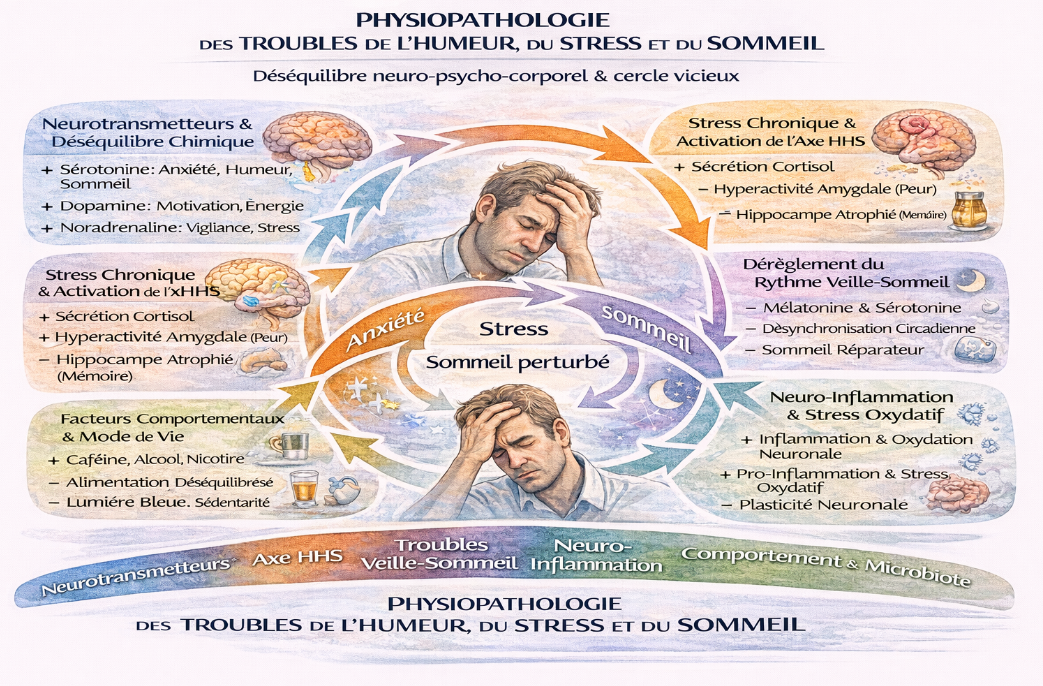
Mood disorders, chronic stress, and sleep disorders are closely linked.
They share common neurobiological mechanisms and often feed into one another in a vicious cycle that is difficult to break.
Mental fatigue, irritability, anxiety, difficulty falling asleep… these symptoms do not occur in isolation. They reflect an overall imbalance in the nervous system.
1. Neurotransmitter Imbalance: At the Heart of Mood and Sleep
Emotional balance depends primarily on three neurotransmitters:
Serotonin: regulation of mood, anxiety, and sleep
Dopamine: motivation, mental energy, pleasure
Norepinephrine: alertness and stress response
Dysregulation leads to:
Mood swings or depression
Nervousness
Difficulty falling asleep
Waking up during the night
This chemical imbalance is one of the first links in the chain of the disorder.
2. Chronic stress and cortisol overactivation
Prolonged stress excessively activates the hypothalamic-pituitary-adrenal (HPA) axis.
Consequences:
Elevated cortisol secretion
Hyperactivity of the amygdala (fear center)
Impaired emotional regulation
➡️ The brain remains in a constant state of alert, preventing the relaxation necessary for falling asleep.
This hypervigilance fuels anxiety and sleep disorders.
3. Disruption of the circadian rhythm and melatonin
Stress and emotional disturbances disrupt the biological clock:
However, lack of sleep:
A vicious cycle sets in:
Stress → poor sleep → emotional instability → increased stress
4. Neuroinflammation and mental fatigue
Recent research highlights:
Activation of pro-inflammatory cytokines
Increased cerebral oxidative stress
Impaired neural plasticity
These mechanisms contribute to:
This is therefore not merely a “psychological” problem, but a comprehensive neurobiological imbalance.
5. The Role of Thoughts and the Limbic System
The limbic system (amygdala, hippocampus) regulates emotions.
In cases of chronic stress:
➡️ The brain perpetuates the emotional response.
This cognitive loop prevents recovery.
6. Everyday aggravating factors
Certain factors amplify the imbalance:
Excessive caffeine
Alcohol
Late-night screen time
Sedentary lifestyle
Irregular schedules
These factors further disrupt the circadian rhythm and emotional stability.